How to Create a Digital Product You Can Deliver and Run
Move from a known customer problem to a deliverable product. Define scope, compare build options, understand operating costs, and prepare for life after launch.
Soulsy Editorial Team · · 8 min
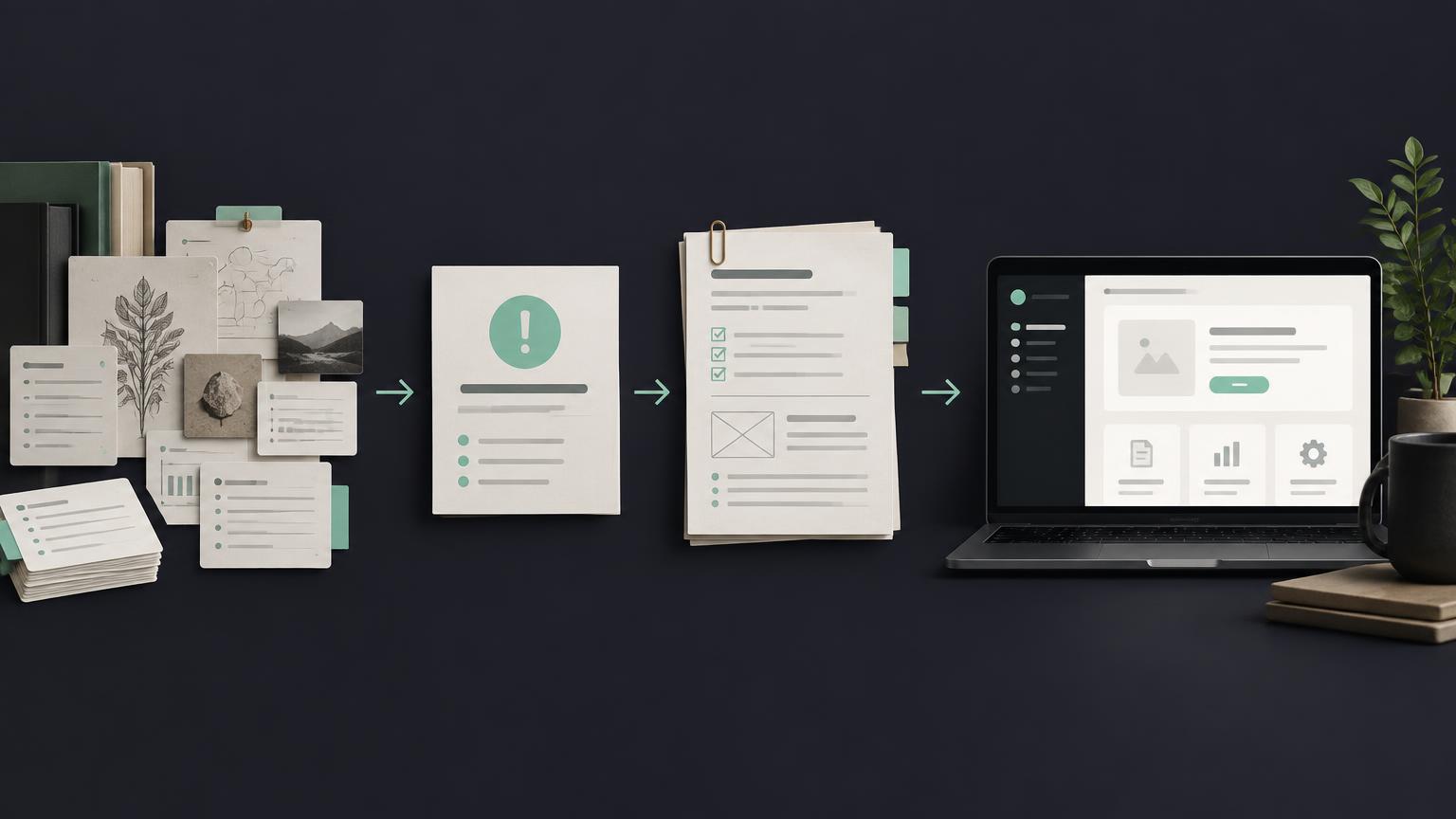
How to create a digital product you can actually deliver
To create a digital product, define a customer outcome, turn it into a usable workflow, and decide how technology, people, and revenue will support it. Your first release needs clear boundaries, a sensible charging model, and someone responsible when things go wrong.
This guide starts from a specific position: you already understand a real problem and are considering how to deliver a solution. It is not about finding an idea or turning professional expertise into a hypothesis. It is about scope, implementation, and ongoing operation.
There is no mandatory technology stack. Depending on the work involved, your first offering might use configured commercial software, a customer portal backed by human delivery, or a custom-built application.
What counts as a digital product?
Here, a digital product means an offering whose primary delivery happens through digital channels and can be used repeatedly. Examples include software, an analysis tool, a learning environment, or a structured collection of resources.
A digital service relies more directly on people to produce the outcome. A hybrid offering combines both: customers use an interface while specialists handle part of the work behind it.
This distinction changes capacity planning, pricing, and accountability. A subscription does not automatically turn a labor-intensive service into scalable software. If each additional customer requires additional human work, that work belongs in the operating model.
Define the delivery commitment first
Before listing features, complete this sentence:
For this customer group, we deliver this outcome, in this situation, within these boundaries.
Treat it as a decision tool, not finished marketing copy. Make clear what you control and what depends on the customer.
A product might organize information for a decision without guaranteeing the decision's eventual outcome. Separating those responsibilities helps keep the promise aligned with what you can deliver.
Identify the user, buyer, and administrator as well. In a business product, they may be different people. A useful interface does not automatically satisfy procurement, access management, or reporting requirements.
A practical digital product planning framework
1. Map the whole workflow
Trace the path from entry to outcome: account access, information submission, processing, review, delivery, and follow-up.
For each step, ask:
- What must the user do?
- What must the product return?
- Which information is necessary?
- What could prevent completion?
- Who handles that exception?
Include work outside the interface. Copying files, checking submissions, and answering messages are part of the delivery system, even when customers never see those activities.
2. Choose a complete first release
A small first release should not be a collection of disconnected screens. It should let someone complete one clearly bounded job.
Divide scope into three groups: essential for completing the workflow, essential for responsible operation, and safe to postpone. Account recovery, information correction, and customer support may belong in the first two groups despite having little marketing appeal.
Write observable acceptance criteria. Replace “an intuitive dashboard” with “the user can find the request status and identify the next action.” That gives you a more concrete basis for review than personal preference.
3. Compare buying, configuring, and building
Judge each option against the workflow, rather than the perceived sophistication of its technology.
| Approach | When to consider it | What to check | |---|---|---| | Off-the-shelf software | The workflow closely matches an existing solution | Functional limits, export options, and pricing | | No-code or low-code | Available components can support the workflow | Permissions, integrations, and platform dependence | | Custom development | Essential rules or integrations do not fit alternatives | Maintenance, testing, and technical capacity | | Digitally enabled service | Delivery still requires human judgment | Team capacity and clarity about the service |
Every approach requires ongoing work. No-code does not mean maintenance-free; owning custom code does not mean cost-free control. Ask vendors to demonstrate your workflow and its exceptions, not just their standard sales presentation.
4. Understand the cost to serve
Account for development, subscriptions, infrastructure, support, human review, payment processing, and maintenance. Separate initial expenditure from recurring costs.
A useful starting calculation is:
Revenue per customer minus costs attributable to serving that customer.
This helps you examine each contract's contribution, but it is not a complete profitability analysis. Shared staff, taxes, and other business expenses still matter.
Where delivery involves people, estimate capacity by activity. Replace assumptions with actual operating records as they become available. Choose subscription, usage-based, licensing, or service-package pricing according to the value delivered and the work required. Recurring billing needs an understandable recurring benefit.
5. Establish data and access responsibilities
List what data enters the product, why it is needed, who can access it, and when it should be deleted. Avoid collecting information merely because it might become useful later.
Plan permissions, account recovery, backups, and incident handling. Where personal data is involved, assess the privacy obligations that apply to your customers and operation. A generic checklist is not evidence of legal compliance.
Vendor agreements should address ownership of code and content, account access, documentation, data export, and termination. Plan how you would leave a provider as carefully as how you would start using one.
6. Design operations and product evolution
Assign responsibility for product decisions, technology, and support, even if one person holds several roles. Document what happens when an integration fails, a payment is disputed, or work needs to be repeated.
Use the roadmap to communicate objectives, dependencies, and decisions—not to present every proposed feature as an unchangeable promise.
Track whether customers complete the main task, where they need assistance, and how much effort your team spends supporting them. Registration volume can provide context, but it does not establish that delivery works.
An entirely fictional example: coordinating creative workshops
The following scenario was invented to illustrate planning decisions. It is not a Soulsy customer story and contains no observed customer results.
In the imaginary town of Clear Tide, a cultural program coordinator wants to offer a workshop coordination service to independent arts spaces. The offering combines a request portal with human coordination and charges per workshop package.
The first workflow lets a venue submit availability, request materials, review a proposal, and track confirmation. The coordinator remains responsible for resolving schedule conflicts and handling exceptions.
She compares commercial software, a no-code setup, and custom development. A separate mobile app is excluded from the initial scope because this particular workflow does not require it. Browser access, a change history, and request export take priority.
Ticket sales and full financial management remain out of scope. Before choosing a provider, she asks how staff would correct a request, restrict access, and retrieve the data when the agreement ends.
This example does not demonstrate which technology would win. It shows how a delivery commitment can guide scope, procurement, and operations without pretending that human work has disappeared.
How to evaluate a development proposal
Give competing providers the same scope document. Prices are not directly comparable when one proposal includes testing, deployment, and documentation while another includes only implementation.
Ask for explicit deliverables, acceptance criteria, exclusions, dependencies, and maintenance terms. Establish who configures the production environment, who fixes defects, and what counts as a scope change.
Request an accessible explanation of limitations and alternatives. A useful proposal makes trade-offs understandable rather than hiding uncertainty behind technical language.
Also ask which decisions you will need to make and when. Missing content, unavailable integrations, or unresolved approval responsibilities can prevent progress even when the engineering work is well organized.
Common mistakes when creating a digital product
- Automating everything immediately: this can increase investment before operational exceptions are understood.
- Confusing recurring billing with recurring value: customers need a clear reason to keep using and paying.
- Treating launch as the finish line: support, monitoring, and maintenance remain part of delivery.
- Tracking acquisition alone: new accounts do not explain abandonment, rework, or service cost.
- Ignoring the exit plan: access, documentation, and portability should be discussed before dependence develops.
Validation also continues during operation. Look for evidence in task completion, actual use, and willingness to pay. Positive comments are useful input, but they are not a guarantee of a sustainable business.
An action plan for your next decision
Use four work blocks. These are a suggested sequence, not a delivery-time estimate.
- Commitment: describe the customer, outcome, boundaries, and responsibilities on one page.
- Delivery: map the workflow and choose what must work from beginning to end.
- Operating feasibility: compare approaches, costs, human capacity, and dependency risks.
- Execution or procurement: agree on acceptance criteria, owners, and the signals that will guide improvements.
The result should let you explain what you will deliver, what you will exclude, and how you will know whether the operation is working.
Frequently asked questions
Do I need to know how to code?
Not necessarily. You need to understand the workflow, assess limitations, and obtain technical expertise appropriate to the risk. Visual tools do not remove decisions about security or data handling.
How much does it cost to build a digital product?
Without scope, integration requirements, and operating expectations, a price would tell you little. Compare the total cost of establishing and maintaining delivery, not just the initial development quote.
Can I start with a service?
Yes, provided customers understand the human involvement and pricing covers it. Consider automation when the process is sufficiently understood and there is an economic or quality-based reason to automate.
When should I commission custom software?
When essential requirements are not adequately served by available alternatives and you can maintain the resulting system. A differentiated commercial offering does not, by itself, require proprietary code.
Sources and limits of the guidance
The Scrum Guide, by Ken Schwaber and Jeff Sutherland, 2020 edition, supports the use of a Product Goal, usable increments, and inspection and adaptation. It does not prescribe a budget or guarantee commercial success.
ISO 9241-210:2019 describes human-centered design activities, including understanding the context of use, specifying user requirements, and evaluating solutions. It supports attention to users' work, not a particular technology choice.
The OWASP Application Security Verification Standard, ASVS, provides requirements for verifying web application security controls. It can inform technical discussions but does not replace a contextual assessment or establish legal compliance.
The framework and fictional example here are editorial synthesis and illustration, not findings from a comparative study.
Conclusion
Creating a digital product means establishing a delivery commitment you can fulfill and sustain. Scope, technology, pricing, and operations need to work together.
If you understand the problem but need to organize these choices, the Soulsy diagnostic can be a next step toward structuring the discussion before committing to implementation.